Updated May 2026
Most people understand that losing a tooth affects how they look and how they eat. What is less widely known is what happens beneath the surface after a tooth is gone. Bone resorption is one of the most significant and least visible consequences of tooth loss, and understanding it is key to making informed decisions about your oral health.
What Is Bone Resorption?
When a natural tooth is present, its root transmits pressure into the jawbone every time you bite or chew. This stimulation signals the body to continue delivering the nutrients needed to maintain bone density in that area. When the tooth and its root are lost, that stimulation disappears. The body, interpreting the bone in that area as no longer necessary, gradually begins to reabsorb it.
This process, known as bone resorption, begins relatively quickly after tooth loss and continues for months or years if not addressed. The effects go beyond a single missing tooth. As bone volume decreases, the shape of the jaw changes, neighboring teeth can shift or loosen, and the overall structure of the face begins to be affected. Patients often describe this as a prematurely aged or sunken appearance over time.
You can learn more about the broader implications on our Bone Loss conditions page.
How Dental Implants Prevent Bone Loss
Of all the options available for replacing a missing tooth, dental implants are the only solution that addresses bone resorption directly. This is because an implant replaces not just the visible portion of the tooth but the root itself.
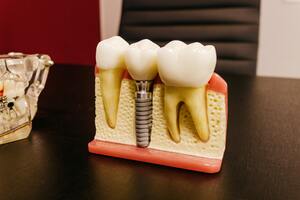
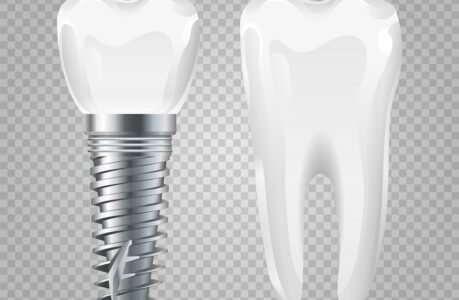
A dental implant consists of a small titanium post that is surgically placed into the jawbone. Because of the unique properties of titanium, the surrounding bone fuses to the implant surface through a process called osseointegration. This fusion creates a stable, permanent foundation for the prosthetic crown placed on top, and it restores the mechanical stimulation the bone needs to maintain its density and volume.
Traditional restorations such as bridges and dentures restore the appearance and some function of missing teeth, but they do not replicate the root. Without that stimulation, bone loss continues beneath them. Patients with dentures often find that the fit changes over time precisely because the bone supporting them is continuing to resorb. You can learn more about full-arch options on our Replacing All Teeth page.
The Importance of Timing
One of the most important things to understand about bone resorption is that it responds to timing. The sooner a missing tooth is addressed, the less bone loss will have occurred and the more straightforward implant placement tends to be.
When implant placement is delayed significantly, the volume of bone available may no longer be sufficient to support an implant without additional preparation. In these cases, Bone Grafting is used to rebuild the foundation before or alongside implant placement. This is a predictable and well-established procedure, but it does add time to the overall treatment process.
In situations where a tooth is being extracted, placing a bone graft at the same time, a procedure called socket preservation, can significantly slow the rate of resorption and preserve the bone volume needed for a future implant. If you are facing an extraction, our Tooth Extractions page outlines how we approach this proactively.
For patients requiring additional vertical bone height in the upper jaw, a Sinus Lift may also be recommended to create adequate support for implant placement.
What If an Implant Has Already Failed?
In some cases, patients come to us after a previous implant has failed or is showing signs of instability. Peri-implantitis, an infection around the implant site, is one of the more common causes and is closely related to the same bacterial processes that drive periodontal disease. Our team has experience evaluating and treating these situations, and in many cases implants can be replaced once the underlying issue has been resolved. Learn more on our Implant Failure or Replacement page.
Are You a Candidate for Dental Implants?
Candidacy for dental implants depends on several factors, including the current volume and density of your jawbone, your overall health, and the underlying cause of your tooth loss. Periodontal disease is the most common cause of tooth loss in adults, and active gum disease must be brought under control before implant placement can proceed. Our Periodontal Treatment services are often the first step in preparing a patient for a successful implant outcome.
For patients with medical considerations that require careful management, our Anesthesia Options and Optimized Systemic Health program ensure that treatment is approached safely and with your full health picture in mind.
At Park Cities Periodontics & Implant Dentistry, Dr. Beth Tomlin and Dr. Stephanie Bowers offer comprehensive evaluations to determine the right approach for your situation. If you would like to learn more about our team before scheduling, you are welcome to read about Dr. Tomlin and Dr. Bowers, or browse our Patient Reviews and Smile Gallery.
If you have questions about bone loss, dental implants, or your options following tooth loss, contact our team to schedule a consultation. We are here to help you understand your situation and move forward with confidence.
Park Cities Periodontics & Implant Dentistry serves patients in Dallas, TX and the surrounding communities. Call us at (214) 522-9700 or contact us online to schedule your appointment.